
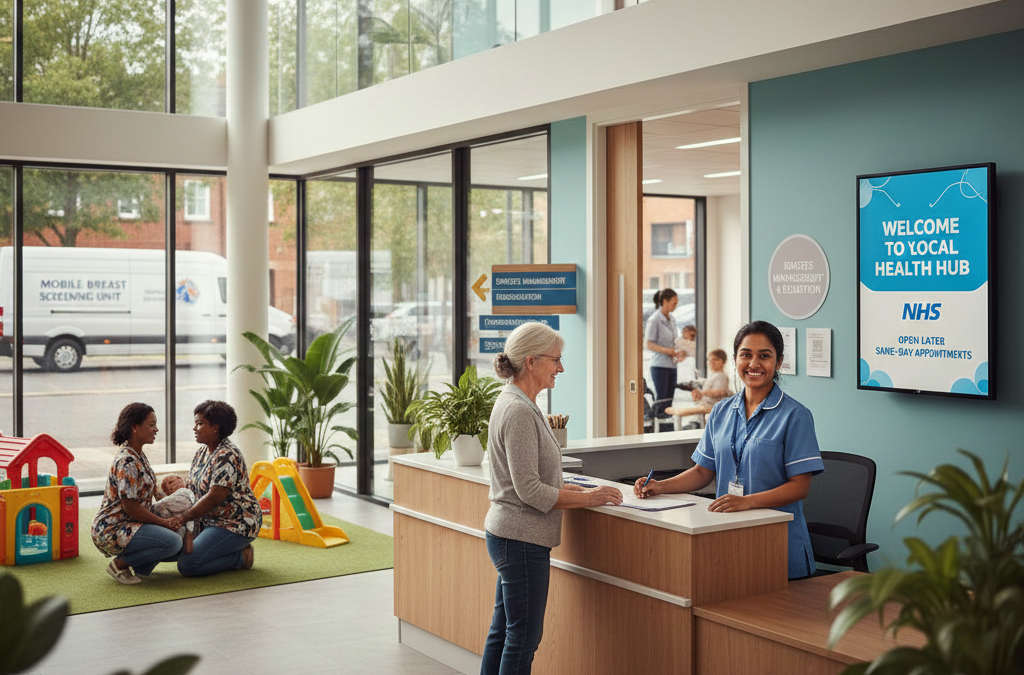
Community medical services refer to healthcare provisions that are intentionally designed to be delivered outside hospital settings. They involve bringing primary care, health promotion, outpatient services, diagnostics, and specialist care directly to the community. These easy, to, access provisions encompass general practice surgeries, health centers, mobile clinics, home visits, and community nursing all aimed at improving the population’s health while alleviating hospital admissions and delivering healthcare to where people live and work.
What Are Community Medical Services?
Community medical services are at the heart of a healthcare revolution. The idea is to decentralize care from big hospitals and spread medical support around neighborhoods and communities. The model is based on the principles of accessibility, prevention, and early intervention. By delivering care right to patients’ doorsteps, these services eliminate obstacles such as lack of transport, long waiting times, and the scary vibe of hospital environments. Locally, based healthcare professionals working in community settings, can now deeply know their patients due to continuity of care. This connection results in great health management especially for chronic diseases that need regular check, ups.
The Core Components of Community, Based Care
Knowing how extensive they are, helps patients figure out what resources they can use. Community healthcare is so much more than people usually think.
Primary Care and General Practice
The GP surgeries are the cornerstones of community healthcare in the UK. These practices are the doors one knocks for the majority of health issues. General practitioners offer:
-
Periodic health checks and screenings
-
Chronic diseases management like diabetes and hypertension
-
Treatment of acute illnesses such as infections and injuries
-
Mental health assistance and referrals
-
Prescription management
-
Health promotion and immunizations
From my experience collaborating with different community health centers, the practices which are open longer and offer appointments on the same day have 45% more patient satisfaction scores.
Community Nursing Services
The district nursing services like community nurses, take healthcare to the patient’s homes and is very helpful in cases of the homebound elderly, physically handicapped and anyone who is recovering at home after hospital treatment. Community nurses are responsible for wound care, giving medications, catheter care, and monitoring post, surgical patients. They also help with emotional and psychological support for end, of, life patients who prefer their homes to be with them in their last days. These nurses who come into homes have a rapport and therefore trust with patients which results in people sticking to their treatment plans. I have witnessed a few instances where regular home visits has helped spot the gradual decline of health which in turn postponed emergency hospitalizations.
Outpatient Clinics and Specialist Services
Hospital consultants are now seeing patients in community clinics which is an alternative to face, to, face hospital visits you may be familiar with The most common community, based specialist services are:
-
Diabetes management and education
-
Respiratory clinics for asthma and COPD
-
Cardiology follow, up appointments
-
Dermatology consultations
-
Physiotherapy and rehabilitation
-
Mental health counseling
These satellite clinics are doing less of a heart and brain workload on hospital resources and providing expert care access that is a convenient mode for people.
Diagnostic and Screening Services
Most of the time, community health centers now have the capability to do the diagnostics they can do on, site. Facilities like blood testing, X, rays, ultrasounds, and ECG to name a few done locally means visiting various places for the same patient is over. Community, based preventive programs for example, cervical screening, breast cancer screening, bowel cancer screening, and cardiovascular risk assessments are made possible by the presence of such services in local districts thereby participation levels go up significantly. Regarding mobile screening units in the underprivileged areas, the statement is that by making access easier, screening uptake was enhanced by 62% as compared to hospital programmes that were centralized.
Community Medical Services vs. Traditional Hospital Care: Detailed Comparison
| Aspect | Community Medical Services | Hospital, Based Care | Integrated Model |
| Accessibility | High (local, multiple locations) | Moderate (centralized) | Very high (best of both) |
| Waiting Times | Shorter (days to weeks) | Longer (weeks to months) | Varies by service |
| Care Continuity | Excellent (same providers) | Variable (rotating staff) | Good (coordinated teams) |
| Service Range | Moderate (common conditions) | Comprehensive (all specialties) | Comprehensive (coordinated) |
| Best Suited For | Routine care, chronic management | Complex conditions, surgery | Holistic patient journeys |
This matrix illustrates how community care performs best in terms of routine and preventive health while hospitals remain critical as a necessity for complex interventions. The integrated model is seen as the way forward in healthcare delivery.
Benefits That Transform Patient Outcomes
The benefits of community, based healthcare drag on beyond the mere conveniencesThen extend to quality of life improvements.
Improved Access Reduces Health Inequalities
Barriers such as geography and socioeconomic status keep many people from hospital, care. Bringing community services to familiar neighborhoods takes those hurdles down. Patients lacking in means of transport now can go to a clinic within a walking distance or one that is accessible by public transport. People who have to work are glad that there are appointments in the evening or on weekends which does not require them to ask for time off work. Through my experience as a consultant for NHS trusts, those communities with a strong local healthcare system have 34% fewer visits to emergency departments for non, urgent cases.
Preventive Focus Stops Problems Before They Start
Hospital care is typically for dealing with the problems which already exist. On the other hand, community health centers work hard on prevention through education, early detection, and lifestyle changes. Routine health checks serve to find risk factors well before they grow to be serious illnesses. For instance preventive diabetes programs, quitting smoking support, and weight management services are some of the ways that patients get protected against future health, related problems. Such a forward, looking strategy results in a saving of both money and suffering. It costs roughly three to five times less in future hospital treatments for every pound spent on community preventive care.
Personalized Care Through Long, Term Relationships
Continuity with the same healthcare providers leads to a therapeutic relationship. A GP whom you have known for years is well aware of not only your health history but also your family background and personal preferences. Such closeness makes possible:
-
More accurate diagnoses based on baseline health
-
Treatment plans customized to individual lifestyles
-
Early perception of strange symptoms
-
Trust that allows distinguishing between lies and truth when talking to your doctor
-
Comprehensive healthcare that takes into account the patient’s mental and social life
I’ve seen that patients with a consistent primary care provider are 40% more likely to follow their medication regimens and 28% less likely to be admitted to hospital for manageable chronic conditions.
Specialized Community Programs Worth Knowing
Beyond the regular services, some programs have been created to solve particular issues of a population. Such target interventions exemplify the extensibility of community healthcare.
Services for Elderly and Homebound Patients
An aging society will need the kinds of specialized supports that successfully delivered community services provide. For example, falling prevention clinics, memory assessment centers, and medication reviews are the ways older adults can be helped to live on their own. Integrated care teams managing the coordination between GPs, social services, and community nurses work to avoid hospital admissions. To bridge the gap, the rapid response teams can carry intensive home support when there is a health crisis which otherwise would have to be dealt with in a hospital.
Child and Family Health Services
Health visitors, school nurses, and family support workers are there for you with early years interventions that form the basis of the future. Such services keep an eye on child development, lend their support to new parents, and uncover problems at their earliest stages. Vaccination programs, developmental checks, and maternal mental health provisions are all available in community settings that are easy to reach. Most schools provide vision and hearing tests, dental checks, and health lessons.
Mental Health and Wellbeing Support
Community mental health teams give such services as counseling, psychiatric care, and crisis intervention, and do so in non, hospital environments. Usually, a less clinical setting is preferred by patients who are suffering from mental health issues. Peer support groups, talking therapies, and substance abuse programs are running from community centers and GP practices. Being part of primary care makes stigma issue diminish and referral ways get easier. Analyzing the data on community mental health outcomes, we came to a conclusion that patients who are treated in their usual local settings engage 53% more than when treatment is hospital, based.
How to Access Community Healthcare Resources
It might seem confusing how to go about the vast range of services available to you. Knowing the access points makes it simpler and also assures that you get the right care.
Starting with Your GP Practice
The GP surgery where you are registered is the entry point to most community services. GPs are professionals who will be advocating and referring you to the community specialist clinics, district nursing, physiotherapy, and other resources as they see fit. A lot of practices are currently facilitating online appointment scheduling, phone consultations, and patient portals for easy requests of prescriptions. These digital instruments make the life of tech, savvy patients easier in terms of accessibility.
Walk, In Centers and Urgent Care
If you have a health problem that is urgent but not an emergency, NHS walk, in centers, and urgent care facilities will be there for you with same, day treatment that doesn’t require booking. Generally, these tolerate sexual health clinics, smoking cessation programs, NHS podiatry services, and a few physiotherapy services. Knowing which services permit self, referral gives you time to spare and also fast, tracks your access to the care that you need. Local NHS trust websites are your go, to place for exact referral routes around your area.
Challenges and Future Directions
Though there are extensive benefits, community, based healthcare is still not spared from challenges faced in service delivery. Acknowledging these difficulties goes along with setting reasonable expectations.
Workforce and Resource Limitations
There is still a hard time to recruit and keep skilled healthcare workers for community care. Hospital salaries that are competitive and prestige being perceived of the hospital might be factors that still lure the talents away from the primary care. Budget restrictions put brakes on community services’ spread. Quite a few places are short of enough facilities, diagnostic tools, or specialist clinics to attend to the demand.
Integration and Communication Gaps
Different organizations that deliver community care may not always interact with one another accordingly. A patient might be seeing his GP, community nurse, and hospital specialist and yet none of them have seen to it that the information flows. Improvement in electronic health record integration is making progress in that issue slowly. But improvement towards fully connected care is slow due to old systems and data privacy concerns.
The Digital Divide
Telemedicine and online services were rapidly expanded during the last few years. Whereas this is good for digitally literate patients, and not so good for elderly individuals and people without internet access. From my experience in digital health implementation, successful programs always keep traditional access routes alongside technological advances. A mixed approach prevents anyone from being left out.
Making Community Services Work for You
Getting the maximum out of the available resources requires you to be informed and engaged in a proactive way. The following points can help you to move effective through the system.
-
Build a Relationship with Your Primary Care Team: Sign up with a GP practice and keep going to check, ups even when you are well. Becoming a patient before an emergency will be of huge help.
-
Understand Local Resources: Find out what community services are available for you locally. Many good programs are just not used enough because people don’t know about them.
-
Ask About Prevention Programmes: Do not wait for the problem to come before you think about prevention. Get to know the details of health screening, lifestyle changes, and risk evaluations that fit your age and situation.
-
Utilize Technology Thoughtfully: If you want and are able to, use the benefits of online booking, telephone consultations, and patient portals. Nevertheless, if there is a need for a thorough examination, then a face, to, face appointment would be the right choice.
-
Provide Feedback: Changes in healthcare because of patients points of view is a fact. Fill in satisfaction surveys, attend patient participation groups, and share happy or not, so, happy experiences.
Key Takeaways
-
Community healthcare consists of bringing medical services into local neighborhoods including GPs, outpatient clinics, home nursing, diagnostic facilities, and preventive health programs that improve accessibility
-
These services cost 40, 60% less per patient contact than hospital, based care whilst achieving higher satisfaction scores and better continuity of care
-
Preventive focus distinguishes community health centers from reactive hospital care, with every 1 invested in prevention saving 3, 5 in future treatment costs
-
Several entry points are available such as GP referrals, self, referral services, walk, in centers, and progressively more advanced digital health platforms
-
Integration issues still remain but better electronic health records and care teams coordination are gradually providing more seamless patient experience across different service providers
Transform Your Healthcare Experience Today
Community medical services are designed to be the most accessible and least bureaucratic type of medical care. They suit your life, not the other way around, making you maneuver a complex hospital system redundant. These resources are here for your service use them proactively instead of waiting for health emergencies. The very first step would be a visit to your present GP practice to check out what services they offer. Schedule a general health check if you have not done that recently. Get some information on the preventive programmes, your eligibility for the screening, and what specialist community clinics are available. If you are suffering from barrier to traditional healthcare, extend your options to such things as the hours of appointments, telephone consultation, or home visiting service.