Physical Address
304 North Cardinal St.
Dorchester Center, MA 02124
Physical Address
304 North Cardinal St.
Dorchester Center, MA 02124
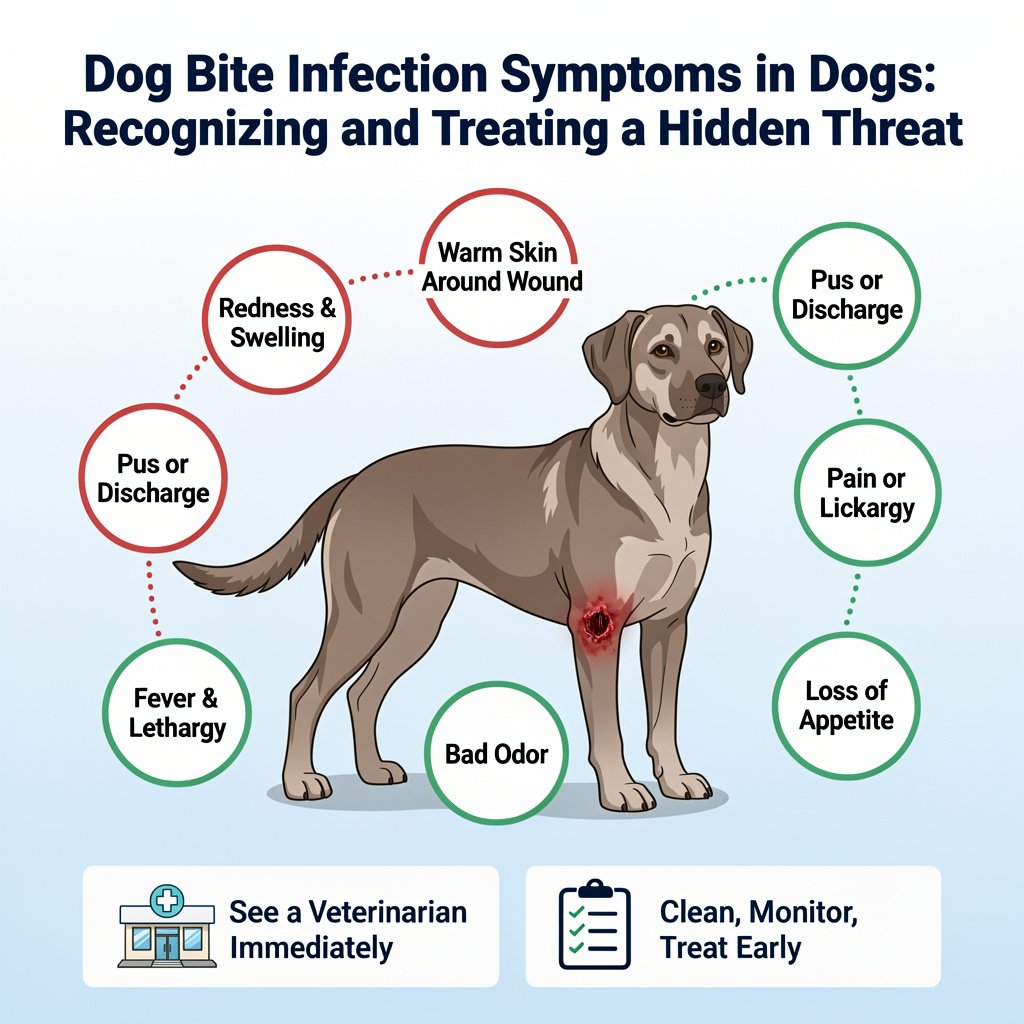
Dog bite infection symptoms in dogs may manifest through swelling, redness, pain, and heat at the wound site. A fever and lethargy might also be present, along with pus and changes in behavior. A trip to the vet is necessary to avoid the development of abscesses, tissue death, or even sepsis.
Dog fights or aggressive play between dogs can sometimes result in one or both dogs with bite wounds—some visible, others concealed under the fur. Frequently, the owners find out about the injury only after it becomes infected. Recognizing the first and later signs of a dog bite infection can be the difference between a simple treatment and a life-threatening situation.
In this detailed guide, you will learn how to recognize the symptoms of infection, the diagnostic journey including lab testing, and the treatment protocols I have employed both in the clinic and the rescue environment.
Dog bites are not just punctures. The mouth of a dog is full of bacteria, such as Pasteurella, Staphylococcus, and Capnocytophaga. In fact, small bites can cause the bacteria to travel deep in the skin, thus creating the perfect conditions for infections that rapidly progress.
Puncture wounds appear to heal on the surface quickly, thus bacteria are trapped underneath
Saliva introduces multiple strains of bacteria into soft tissue
Dogs often lick wounds and this leads to reinfection
Bite injuries are most of the time neglected if fur hides them
As an emergency vet assistant, I can say that the severest infections I have encountered were the ones that resulted from wounds that the owners had not noticed for 48 hours or more.
Most dog owners initially recognize something is off through the behavior of their dogs. The physical signs may not be visible at once but will develop within 12–72 hours after the bite.
Swelling, redness around the wound
The skin near the injury is warm or hot
Pain or yelping when the area is touched
If the bite is on a limb, limping or stiffness
Behavior changes—aggression, hiding, withdrawal
Excessive licking of a particular area
Pus/Discharge from the wound
Foul odor around the bite area
Fever (in dogs over 103°F)
Loss of appetite
Lethargy or depression
Muscle stiffness or localized paralysis
Visible abscess or necrotic skin (blackened or dying tissue)
| Feature | Infected Bite | Non-Infected Bite |
| Swelling | Fast, continuous | Little or unchanged |
| Behavior | Lethargy, whining, hiding | Normal activity |
| Pain Response | Increased sensitivity and yelping | Only when touched |
| Discharge | Pus—yellow, greenish, or foul-smelling | Clear fluid or dry scab |
| Temperature of Site | Hot to the touch | Normal skin temperature |
| Wound Edges | Inflamed, red, possibly necrotic | Clean edges forming a scab |
| Healing Progress | Deteriorating after 1-2 days | Getting better after 24-48 hours |
Veterinarians do not make assumptions—they carry out tests. This is how we confirm a suspected infection resulting from a dog bite:
My first step is always to shave the hair around the wound so that I can see the full extent of the injury. In many cases, what looks like one puncture is actually multiple layered wounds underneath.
Whenever there is a suspicion of infection, I suggest a set of tests including:
Complete Blood Count (CBC): Detects increased white blood cells
Bacterial Culture or Swab: Finds out the exact bacteria present
Cytology: Looks at fluid or tissue under a microscope
C-Reactive Protein (CRP): Shows that inflammation affects the whole body
To check for foreign material (e.g. broken teeth) or deep abscesses, we can use X-rays or ultrasound.
Dog bite infections call for both localized wound care and systemic therapy.
Before you get to the vet, you can:
Clean the wound with saline or diluted Betadine
If there is bleeding, stop it by applying gentle pressure
Stop your dog from licking or scratching the wound (wear a cone if you can)
Important: Do not use ointments from your medicine cabinet unless your vet specifically instructs you to. Some creams that are made for humans may be poisonous to dogs.
Depending on our test results and the infection stage, I typically:
Antibiotics: Examples of antibiotics include Clindamycin, Amoxicillin, Clavulanate, and Cephalexin. Duration of the course is 7-14 days depending on the infection severity.
Surgical Drainage or Debridement: We cut open the bite and let the pus out or take the dead tissue away if abscesses or necrotic tissue have formed.
Pain Management: NSAIDs such as Carprofen or Meloxicam. Do not give painkillers that are meant for humans—ibuprofen and acetaminophen are poisonous.
Tetanus and Rabies Considerations: Although dogs are not tetanus carriers like humans, the risk of rabies should be assessed, especially if the biter is unknown or a stray.
The neglect of dog bite infection symptoms in dogs may result in significant health risks beyond those limited to the local area:
Cellulitis: Infection that spreads through the skin
Abscess Formation: The formation of pus-filled, painful sacs
Sepsis: Infection in the bloodstream, which can be fatal
Joint Infections: In particular, if the bite was close to a limb
Organ Involvement: In very rare cases, the infection may reach the liver or kidneys
During one shelter case, I witnessed a small muzzle wound turning into a complete facial abscess within 4 days. The dog had to undergo surgery and IV antibiotic treatment for a week.
Monitoring at home is equally important for the recovery process after veterinary care. My recommendations are:
Checking the wound temperature every day
Noticing any color changes
Being alert to new swelling or discharge
Making sure your dog is eating, drinking, and behaving normally
If the area is draining, use clean gauze pads. Keep all your appointments with the vet, especially if cultures were taken during the first visit.
Though it is not possible to prevent every dog fight, you can lower the risk of infection:
Do not let dogs eat from the same bowl or snatch food from their mouths
Be present while dogs meet for the first time
Help reduce aggression by spaying or neutering
Keep vaccinations up-to-date in order to lower the risk of rabies
Train your dog in obedience and reading body language
Dog bite infections have the potential to worsen fast and should never be taken lightly
Initial symptoms include swelling, heat, and behavior changes
Testing in laboratories is what guides the use of antibiotics and the treatment plans
If not treated properly, bites can result in serious sequelae such as abscesses and sepsis
Prompt veterinary care and proper home management are the best solutions
If your dog has been bitten recently or is showing any alarming signs like swelling, pain, or fever, do not wait. Infection can take hold in hours. Get in touch with your veterinarian right away or go to the nearest emergency clinic.
Want more guides like this? Save our blog as a bookmark or sign up for notifications on canine first aid and health care tips.
Your dog can’t talk—but with the right knowledge, you can listen to what their body is saying.