Physical Address
304 North Cardinal St.
Dorchester Center, MA 02124
Physical Address
304 North Cardinal St.
Dorchester Center, MA 02124

The lab is the place where the future is shaped by the present work of the scientists. Be it the work for the detection of diseases or the ground-breaking research, the lab work is absolutely invaluable. However, this place has also its own risks because lab safety is not only about following the lab safety procedure; it has to be one of its ethical, sound, and judicious principles in the aims and objectives of scientific exploration and application.
Lab safety is more about accident prevention than merely accident focusing. This needs a culture of foreseeing the dangers that could happen even before they occur.
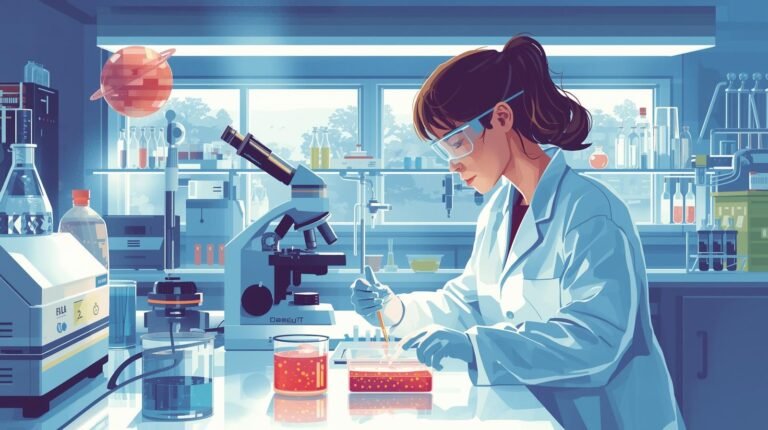
The significance of PPE cannot be overemphasized. It shields the body against the attack of a splash of a chemical, biological materials, and physical injuries.
Lab Coats: Always worn and done up, giving an extra layer of protection to the clothes underneath. They are taken off before leaving the lab so that the spreading of contamination from the lab can be avoided.
Safety Glasses/Goggles: These serve the eyes from being harmed due to splashes, foreign bodies, and UV rays. Depending on the nature of the work, some safety glasses may be necessary, for example, those with splash shields or face shields.
MSDS/SDS: The Material Safety Data Sheets (MSDS) or Safety Data Sheets (SDS) is the most recent document for every chemical that tells about the hazardousness, the storage and handling, what to do if there is an emergency, and the ways of disposing of the chemical safely.
The need for biological safety doubles when working with biological agents such as microorganisms and human tissues.
Biosafety Cabinets: Class I, II, or III are the cabinets used for protection of personnel, product, and/or environment during work with biohazards.
Sharps Management: Very specific procedures concerning the immediate disposal of needles, scalpels, and sharps in puncture-proof containers so as to decrease needle sticks.
Spill Kits: These are at hand in case of chemical or biological spills, and are stocked with appropriate absorbents, neutralizers, and personal protective gear.
Emergency Contact Information: Definitely the most important of all, the information must be easily accessible at all times, be it the in-house safety officers or external emergency services.
Keeping the lab clean and neat is the lab’s way of being safe.
| Practice | Requirement |
| Workplace Tidiness | Keeping benches free from obstruction and aisles clear to avoid tripping and falling. |
| Food and Drink Policy | Not allowed in active work areas to prevent the intake of harmful substances. |
| Hand washing | Must be done regularly, especially after glove removal and when leaving a lab session. |
| Waste Segregation | Must be performed at its source; this is a significant factor in biomedical waste management. |
Training: All workers must be trained in the safe use of any equipment they operate.
Maintenance/Calibration: Regular maintenance and calibration will not only keep the device from malfunctioning but also ensure the precision of the results.
Incident Reports: Putting incidents down in writing can be of assistance in understanding the causes and taking the necessary preventive steps.
Improper handling and disposal of biomedical waste have become significant threats to the safety of lab workers and the environment.
Biomedical waste may be defined as containing:
Infectious Waste: Cultures and stocks of infectious agents, and wastes of patients with highly communicable diseases.
Sharps Waste: Needles and syringes, scalpels, and broken pieces of glass that can easily pierce the skin.
Pharmaceutical Waste: Expired, unused, or contaminated drugs.
Genotoxic Waste: Materials that emit radiation or waste generated by the infusion of cytotoxic drugs.
Chemical Waste: Excess solid, liquid, or gas-forming substances.
Biomedical Waste Management is carried out with an emphasis on segregation at source.
| Container Color | Type of Waste |
| Red Bags | Infectious waste, contaminated gloves, plastics, and disposable laboratory equipment. |
| Yellow Bags | Waste containing chemical and cytotoxic components or highly infectious materials. |
| Sharps Containers | Intentionally hardened containers for needles and scalpels. |
| Blue/White Bags | Recyclable or non-contaminated general lab refuse. |
Autoclaving: Uses steam sterilization to render waste non-infectious.
Chemical Disinfection: Carried out if the substance is either liquid or specific types of solids.
Microwaving: Involves the use of wet heat for disinfection.
Record Keeping: Maintaining detailed records on waste generation, treatment, and disposal is a must for regulatory requirements and audits.
The best approach to laboratory safety is the creation of a solid safety culture through management commitment.
Training and Education: Should cover every aspect of the laboratory safety regulations, emergency procedures, and biomedical waste management.
Employee Involvement: Soliciting help in identifying potential risks gives employees a sense of ownership and enhances safety consciousness.
Regular Audits: Internal and external inspections help in closing loopholes and allowing continuous safety improvements.
Communication: Proper communication concerning safety matters, incident reporting, and policy changes allows for a proactive and safety environment.
The especial component of the safety culture requiring unseverable laboratory standards and tight managed biomedical waste modaithtresuch philosophy of lab. This research paper rises the issues of lab safety, including the established lab safety standards and the most important aspects of handling and disposing of potentially hazardous materials.