
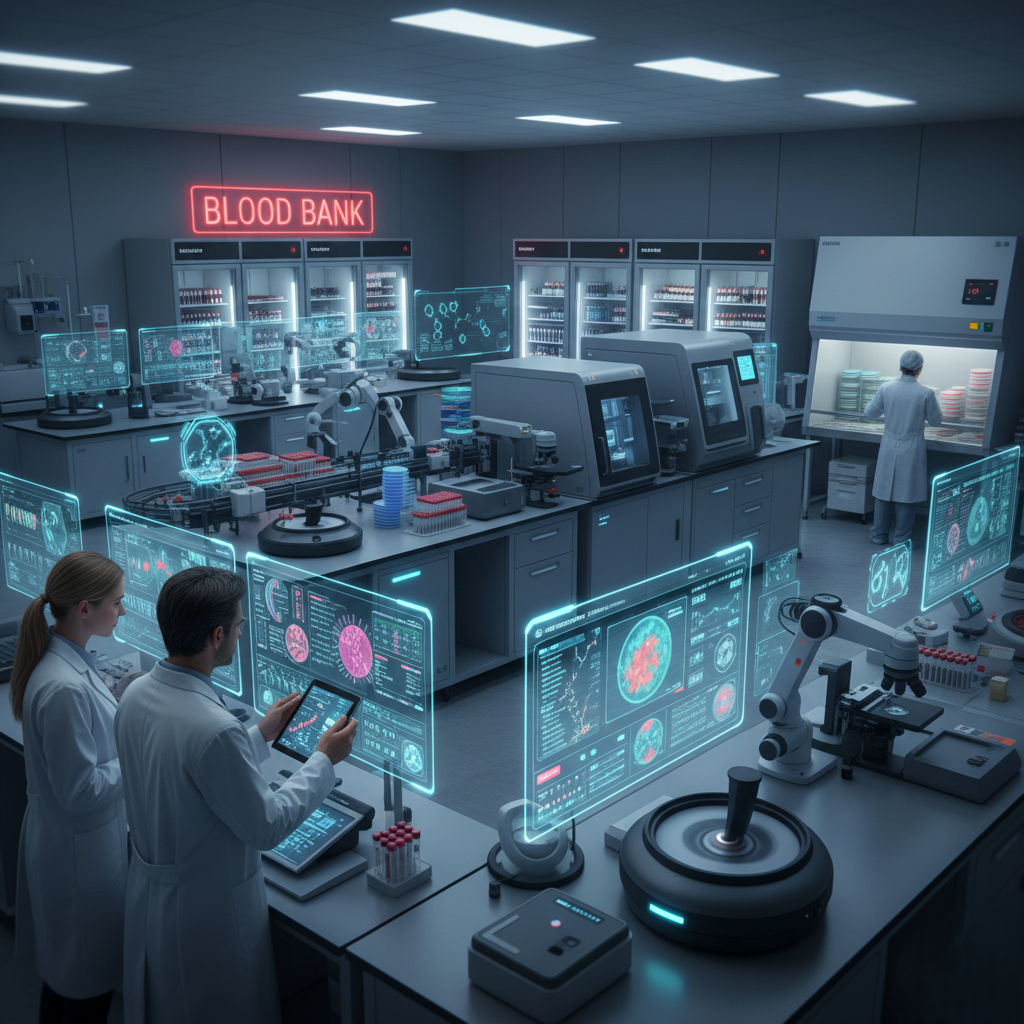
Medical Laboratory Technology is the foundation of modern medicine. Most of the time, laboratory experts work unnoticed in the background to carry out the vital diagnostic tests that impact nearly 70% of all doctors’ medical decisions. If laboratory results were not accurate and of good quality in a timely manner, then the diagnosis, treatment, and monitoring of patients would be impossible. The research area includes biology, chemistry, and technology so that it becomes one of the most significant scientific disciplines in healthcare.
Comprehending Laboratory Technology
Laboratory technology is a combination of different scientific methods, different kinds of equipment and skilled specialists who carry out the analysis of human samples such as blood, urine, tissue and other fluids, to find diseases, measure drug levels in blood and monitor health. Testing can be as simple as measuring blood sugar or as complex as analyzing DNA.
Key Disciplines in the Lab
- Immunohematology (Blood Bank): Testing of blood for transfusions which includes checking for compatibility between the donor and recipient.
- Immunology/Serology: Testing and analysis of bodily immune system reaction (e.g., HIV or Lyme disease test).
- Urinalysis: Urine testing consisting of physical, chemical, and microscopic examination.
The Professionals: Titles and Educational Pathways
Professionals engaged in this field usually have different titles that might as well confuse the reader. The common titles under which they operate include Medical Lab Scientist, Medical Technician, and Clinical Technician.
1. Medical Lab Scientist (MLS)
Role and Scope: The Medical Lab Scientist, or Clinical Laboratory Scientist or CLS is the most skilled tester in the laboratory according to the usual definitions. They carry out complex analysis, assess and rectify faults in the hi-tech equipment, apportion and interpret abnormal results, and manage the various programs for quality control in the laboratory. They may also get involved in teaching, research, and supervising laboratories.
Education Required: A bachelor’s degree (B.S.) in Medical Laboratory Science or a similar area of science together with a clinical rotation program is the requirement.
Certification: Certification is strongly suggested and usually required by the employer. The most important certification is the MLS(ASCP) credential that is issued by the American Society for Clinical Pathology.
2. Medical Technician (MLT)
Role and Scope: The Medical Technician works with routine lab procedures under the supervision of an MLS or Pathologist. He/She performs tasks like sample preparation, running of automated tests, and doing basic microscopic examinations, which are all very important. The lab’s smooth daily operations depend heavily on them.
Education Required: An associate’s degree (A.A.S.) in Medical Laboratory Technology or a postsecondary non-degree award is a requirement.
Certification: The main credential is the MLT(ASCP) certification.
3. Clinical Technician (or Laboratory Assistant)
Role and Scope: This is normally an entry-level position; it often includes Phlebotomists (who are responsible for taking blood samples) and Laboratory Assistants as well. The tasks of the former include a long list of activities: collecting specimens, processing them, preparing them for testing, and carrying out some administrative duties, which are not very demanding. However, the difficult diagnostic analyses are still not done by them.
Education Required: A high school diploma, in most cases, along with some vocational or training program or certificate and/or on-the-job training, is the requirement.
Key Professionals in Laboratory Technology
The subsequent table illustrates the major differences in the roles bespeaking the Medical Laboratory Science field.
| Professional Title | Required Education | Primary Certification | Typical Responsibilities |
|---|---|---|---|
| Medical Lab Scientist (MLS) | 4-Year Bachelor’s Degree | MLS(ASCP) | Complex testing, equipment troubleshooting, quality control, method validation. |
| Medical Technician (MLT) | 2-Year Associate’s Degree | MLT(ASCP) | Routine testing, specimen processing, equipment maintenance, quality assurance. |
| Clinical Technician | Certificate or On-the-Job Training | Varies (e.g., PBT(ASCP) for Phlebotomy) | Specimen collection, processing, basic administrative support. |
The Critical Importance of Medical Lab Scientists
Medical Lab Scientists are the backbone of the diagnosis process. Nonetheless, the professional’s expertise is still invaluable in many critical situations:
- Troubleshooting: When a malfunction or questionable patient results occurs in an automated analyzer, the MLS utilizes scientific principles to pinpoint either the source of the instrument problem or the patient result verification via manual means. This calls for a scientific basis in laboratory technology and instrumentation to be any capable of doing that.
- Blood Bank: The decision-making process in the Immunohematology section very often involves life and death scenarios. The MLS guarantees that blood for transfusions is absolutely compatible, detecting rare antibodies or complicating blood types that could lead to deadly reactions.
- Microbiology Interpretation: The identification of pathogens and the determination of the appropriate antibiotic therapy—an antimicrobial susceptibility test—require sophisticated techniques and professional judgment to stop the spread of drug-resistant infections.
These skilled workers are very important in making certain that the diagnostic results sent to the physician are not just fast but more than that, accurate and trustworthy, thus complying with the highest standards of patient care and laboratory ethics.
Future of Medical Laboratory Technology
The discipline of Medical Laboratory Technology is always changing; it is being at the forefront of the advances in molecular biology and automation.
Molecular Diagnostics
The increasing use of molecular testing like PCR for infectious diseases and genetic sequencing for cancer risk is not only replacing but also increasing the role of the MLS. Lab professionals of the future will have to master advanced molecular techniques beyond traditional chemistry and hematology.
Integrated Automation
High-speed automated systems are being continuously integrated by the laboratories into their operations. Although these systems significantly lower the amount of manual labor required, they definitely require Medical Lab Scientists with excellent informatics and system management skills for the supervision of the flow of sometimes millions of samples and data through the lab.
The Need and Lack of Availability
The current drastic reduction in the number of professionals in this field should keep the demand for qualified Medical Lab Scientists and Medical Technicians very high, thus granting them excellent job security and competitive salaries. The comprehensive personalized medicine will be directly dependent on the laboratory technology’s capabilities.