
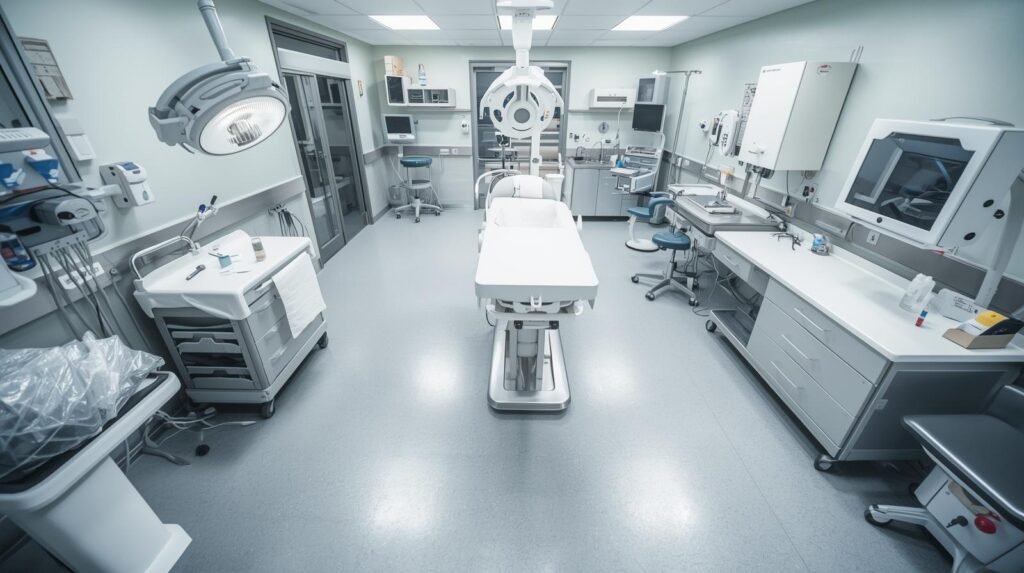
Medical office cleaning is a specialised, high-standard service focused on infection control and patient safety. It is not general cleaning but involves the use of hospital-grade disinfectants, strict protocols for clinical waste disposal and detailed sanitation to prevent the spread of healthcare-associated infections in the different areas of the medical office.
Cleaning of a medical office is not a luxury but rather an essential part of patient care. The very moment a patient walks in, they evaluate and make a judgment based on their surroundings. This guide helps you understand what it takes to deliver the highest standards of healthcare cleaning services.
Why Medical Office Cleaning Is a Must Standard
The main objective of a medical office cleaning schedule is to disrupt the chain of infection. Medical office cleaning differs from regular office cleaning as it focuses on microbiology. Every surface, be it a door handle or a laboratory bench, is a source of infectious agents. It follows that the cleaning should be efficient to kill these threats and protect patients who are at risk as well as your staff.
Additionally, a neat environment has a positive impact on the patients’ trust and belief in the institution. In the medical mode, patients’ anxiety is already high. A spotless and well-organised space would therefore be very comforting and reassuring. It shows your dedication to their health in every detail, which is very important for patient loyalty and building a good reputation.
The Essentials of a Healthcare Cleaning Program
A well-rounded program is founded on several supporting factors, with each one dealing with a different aspect of the risk. It is a systematic approach that goes from the general to the specific and ensures that there is no area left unexplored. This organised method forms the basis for successful medical facility sanitation.
Daily Disinfection Protocols for High-Touch Surfaces
Great care needs to be taken with frequently touched surfaces as these constitute the main source of transmission of infection. Hence, disinfection of these surfaces should be done several times per day using hospital-grade disinfectants approved by the EPA or an equivalent authority. This is certainly not a simple wiping of the surfaces; rather it is a thorough procedure.
The Importance of Clinical Waste Disposal
Improper disposal of clinical waste is a major health and legal risk. Therefore, it should be handled in accordance with strict rules. This comprises using colour-coded, puncture-proof containers for different kinds of waste. For instance:
-
Sharps should be put in designated red or yellow bins.
-
Contaminated dressings should be discarded in separate containers.
A professional service ensures that your practice remains compliant and safe.
Deep Cleaning and Medical Facility Sanitation
Daily cleaning provides a minimum level of cleanliness, but deep cleaning on a regular basis is non-negotiable. Deep cleaning refers to those tasks which are not part of the daily routine yet are very important for long-term sanitation. To use computer jargon, it is a “hard reboot” for the entire environment. This may also involve:
-
Carpet extraction cleaning
-
Steam upholstery cleaning
-
Air duct sanitising to improve indoor air quality and eliminate airborne contaminants
My Experience: What Sets Professional Services Apart
During my experience as a consultant to healthcare practices, I have often found that the most common mistake is to underestimate the complexity of proper disinfection protocols. Many offices think that their general cleaning staff can do the job, but these staff members usually are not trained and do not have the right equipment. I have witnessed that well-meaning staff members use the same cloth to clean a restroom and then a waiting room chair, thus they spread germs instead of killing them.
According to our testing using ATP (Adenosine Triphosphate) meters, which measure organic residue on surfaces, professional teams are always able to reduce bioburden by 99% compared to in-house staff. This is because they follow a systematic, colour-coded cloth system and know the disinfectant “dwell time” required for effective work. The scientific rigour at this level is what truly differentiates healthcare cleaning from general janitorial services.
Selecting Your Medical Office Cleaning Partner
Checking a potential cleaning partner should be done carefully. You are giving them a responsibility for your patients’ safety and your practice’s good name. By asking the right questions, you will be able to recognize the true professionals:
-
Are you specifically experienced in medical office cleaning? Request healthcare references.
-
What are your staff training and certification procedures? Look for continuous infection control training.
-
How do you handle clinical waste disposal? Check if they hold all necessary licenses and meet local regulation requirements.
-
What quality assurance measures do you have in place? Are they using inspection checklists or ATP testing?
-
Can you provide proof of insurance and liability coverage? This is absolutely essential.
In-House vs. Outsourced Healthcare Cleaning Services
Deciding to either take care of cleaning internally or to hire an external cleaning service is a very important decision. Each model has its own advantages and disadvantages in respect to cost, control, and quality. The right decision mainly depends on the size, complexity, and specific needs of your practice.
The comparison table highlights the most important factors for you to make an informed decision.
What Lies Ahead for Medical Facility Sanitation
Healthcare cleaning is an industry that never stands still. The biggest challenge of tomorrow is to ensure even higher levels of protection for patients. Innovations include:
-
Electrostatic sprayers: Provide thorough coverage with disinfectants of surfaces.
-
UV-C light disinfecting systems: Gaining traction for killing pathogens in unoccupied rooms.
-
Antimicrobial surfaces: Used for high-touch articles like countertops and door handles to actively discourage bacteria from multiplying.
By keeping up with these innovations, you can take your commitment to patient safety to a new level and, at the same time, be recognised as a leader in your field.
Summary
Effective medical office cleaning is the most important infection prevention measure. It is not merely an aesthetic choice. Specialised protocols are needed, e.g. high frequency of disinfection of high-touch surfaces and compliance with clinical waste disposal requirements. Professional cleaning providers have higher levels of expertise, training and quality assurance than in-house teams. If you are to choose a partner, healthcare experience and strong quality control should come first. Sanitation in the future will be facilitated by advanced technologies such as electrostatic spraying and UV-C light for better protection.