Physical Address
304 North Cardinal St.
Dorchester Center, MA 02124
Physical Address
304 North Cardinal St.
Dorchester Center, MA 02124
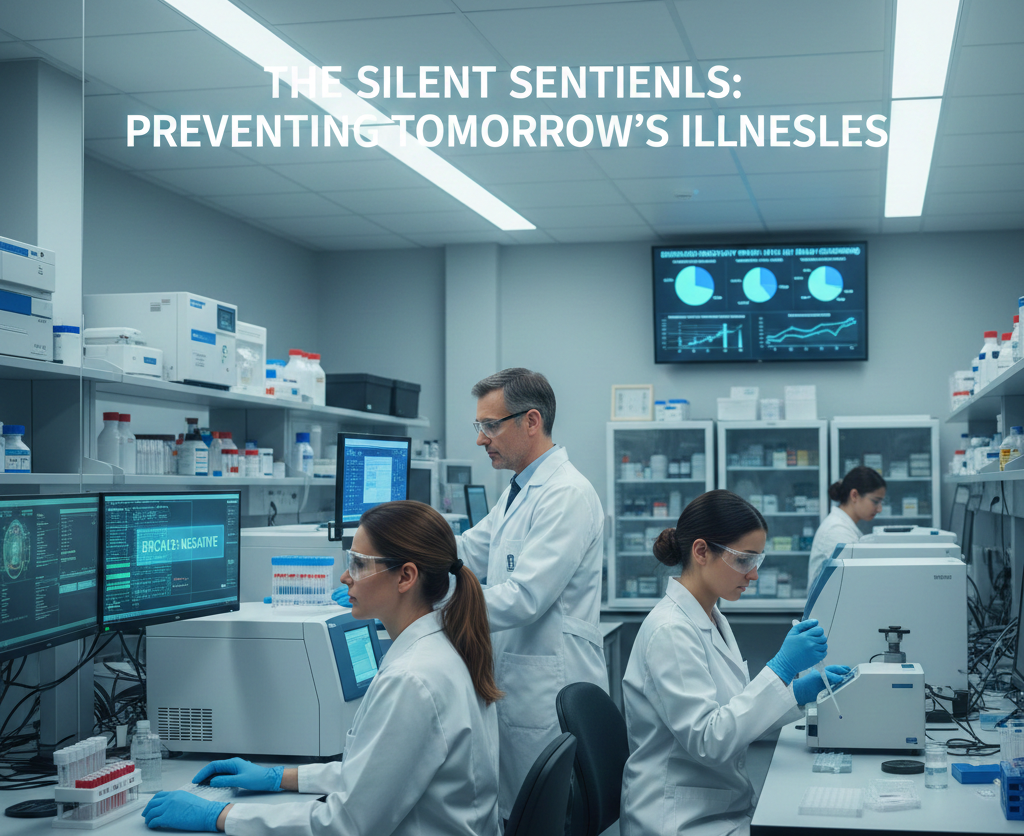
In the high-stakes world of modern medicine, the most powerful tool we possess isn’t always a complex surgical robot or a breakthrough gene therapy. Often, it is the quiet, methodical work occurring behind the closed doors of the clinical laboratory. Prevention and screening represent the proactive frontier of healthcare, shifting the focus from “reacting to illness” to “preserving wellness.”1
At the heart of this shift are the Laboratory Professionals—the Medical Lab Scientist, the Medical Lab Technologist, and the Lab Technician. These individuals are the architects of data that guide clinical decisions, ensuring that diseases are caught long before they manifest as irreversible symptoms.2
Laboratory medicine has transitioned from a supportive diagnostic service to a primary driver of public health. In the past, a patient visited a doctor only when they felt pain or noticed a physical change. Today, prevention and screening protocols allow us to identify metabolic shifts, genetic predispositions, and early-stage malignancies in asymptomatic populations.
The role of the Medical Lab Scientist is critical here. They don’t just “run tests”; they validate complex assays, interpret intricate data patterns, and ensure that the screening tools used are both sensitive enough to catch the disease and specific enough to avoid unnecessary alarm.3
A successful prevention and screening initiative is a multi-layered process.4 It requires a synergy between public health policy and the technical expertise found in the lab. For a program to be effective, it must meet several criteria:
Early Detection: Identifying a condition in its “pre-clinical” phase.
Accuracy: High-quality results provided by a Medical Lab Technologist.
Actionability: The results must lead to a medical intervention that improves the outcome.5
When a Lab Technician processes a routine blood glucose or a lipid panel, they are performing a vital act of prevention and screening. These baseline metrics enable physicians to intervene with lifestyle changes or early medication, thus potentially saving the healthcare system billions in long-term chronic care costs.
While technology has automated many processes, the human element remains irreplaceable.6 Each professional level within the laboratory contributes uniquely to the mission of disease prevention:
These professionals often oversee the quality control and methodology of prevention and screening tests.7 They are responsible for troubleshooting complex instruments and ensuring the output of the laboratory meets stringent regulatory standards.8
Working hand-in-hand with the MLS, the Medical Lab Technologist performs the complex biological, chemical, and hematological tests that make up the core of laboratory medicine.9 Their precision is what facilitates early detection.
In prevention and screening, where volume is high, their attention to detail will prevent pre-analytic errors that could lead to misdiagnosis.
“The lab is the engine room of the hospital. Without the data produced by Laboratory Professionals, the physician is essentially practicing medicine in the dark.”
The landscape of laboratory medicine is rapidly changing. We are moving beyond simple blood counts into the realm of molecular diagnostics and liquid biopsies.10
Perhaps the greatest impact of prevention and screening can be seen in oncology. Tests such as the Pap smear, HPV testing, and fecal immunochemical tests (FIT) have reduced mortality rates drastically.
Diabetes and cardiovascular disease represent the “silent killers” of the 21st century.11 Through continuous prevention and screening, Laboratory Professionals can track such metrics as Hemoglobin A1c levels and C-reactive protein. This allows a precision medicine approach whereby treatment is tailored to the individual’s specific biological response.
The recent spate of global health crises has underscored the need for rapid prevention and screening. But what really prevents localized outbreaks from becoming a global catastrophe is the ability of a Medical Lab Technologist to pivot and implement mass testing for respiratory or blood-borne pathogens.
One of the unique insights provided by Medical Lab Technology is an understanding of biological trends. A single result classed as “normal” is a snapshot. Longitudinal prevention and screening allow data to be tracked over years.
A Medical Lab Scientist looks for subtle shifts in kidney function or liver enzymes that may still fall within the “reference range” but demonstrate a downward trend. This level of analysis is the hallmark of sophisticated laboratory medicine. It turns the lab from a “testing center” into a “wellness consultancy.”
There are, however, some serious hurdles facing the field of Medical Lab Technology. Despite these, the economic benefits remain clear. Screening for hypertension prevents strokes and heart failure.12 Prevention of type 2 diabetes through early glucose monitoring prevents dialysis and amputations.
Laboratory medicine is the most cost-effective department in healthcare. By providing the data for prevention and screening, Laboratory Professionals shorten the length of hospital stays and the need for invasive procedures.
| Screening Type | Professional Involved | Impact |
| Lipid Profile | Lab Technician | Prevents Cardiovascular Disease |
| Molecular Testing | Medical Lab Scientist | Identifies Genetic Predispositions |
| Routine Urinalysis | Medical Lab Technologist | Detects Early Renal Failure |
As we look toward the future of healthcare, the integration of AI and machine learning into Medical Lab Technology will only strengthen our ability to predict illness.13 However, at the core of these advancements will always be the accuracy and dedication of the Medical Lab Scientist, the Medical Lab Technologist, and the Lab Technician.
Prevention and screening are not just checkmarks on a list-to-do; it is a way of care.