Physical Address
304 North Cardinal St.
Dorchester Center, MA 02124
Physical Address
304 North Cardinal St.
Dorchester Center, MA 02124
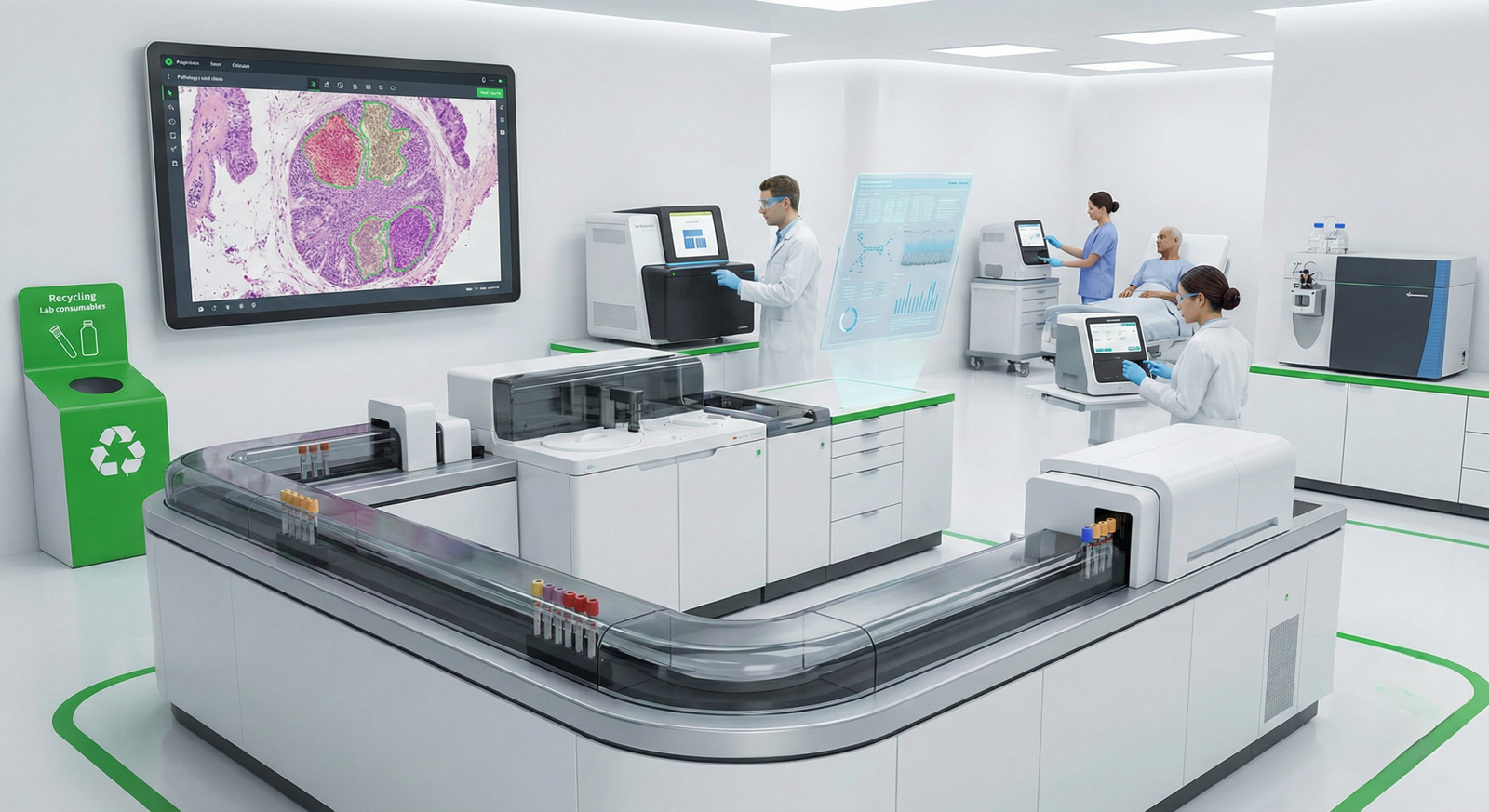
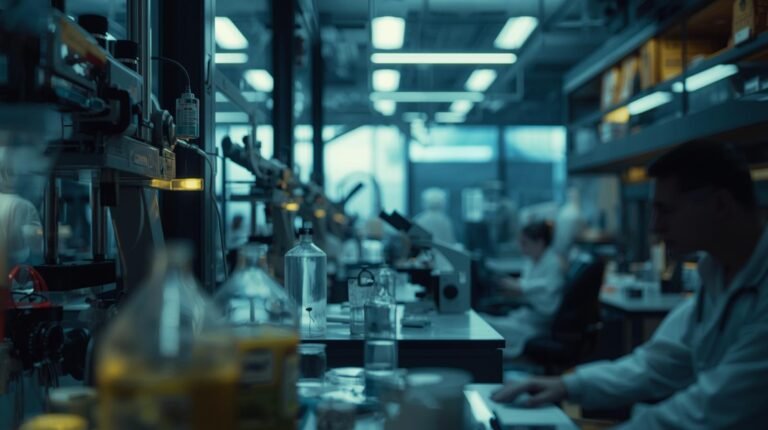
Healthcare is shifting its entire structure as the innovations unveiled in the clinical lab are changing the game. Although doctors and nurses are the ones who appear to be taking care of patients, it is estimated that more than 70% of medical decisions are derived from lab results. At present Laboratory medicine is embarking on a technological turn that will last for a long time and will completely change the way diseases are detected, diagnosed, and monitored.
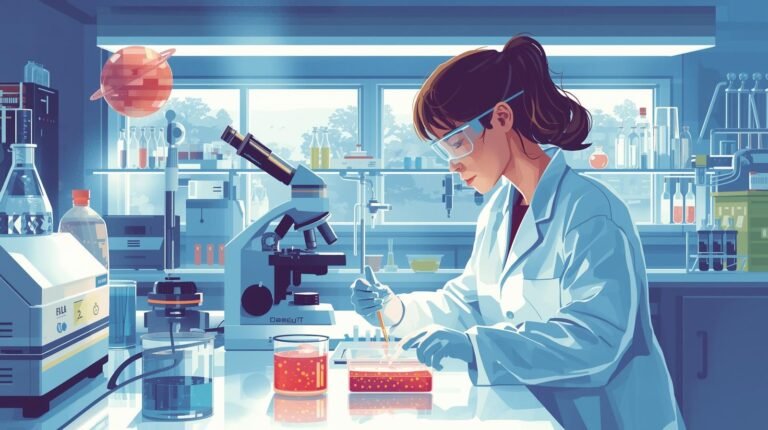
By and large, the Medical Lab Technology changes are not only facilitating the fast completion of the tests, but they are also ensuring testing accuracy, personalization, and public accessibility. The changes happening in this field are first and foremost changing the role of the Medical Lab Scientist, the Laboratory Technologist, and the Lab Technician, as the latter now have the skillset and the authority to be analytical partners in patient care instead of manual task-doers.
The shift towards Total Laboratory Automation (TLA) is probably the most significant changes that can be observed in the modern laboratory. Formerly a Lab Technician had to perform the tube sort, sample centrifuge, and aliquot pipette for a couple of hours manually. The manual handling not only consumed the Lab Technician‘s time but also was a human error source and repetitive strain injuries prone.
Now Medical Lab Technology employs elaborate track systems that actually move the specimens from reception to storage. Robots have taken over decapping, aliquoting, and analyzer loading without the support of humans. For the Laboratory Technologist, the meaning of the work is changed from “feeding machines” to workflow managing and instrument checking.
With the help of automation, Laboratory Professionals can deal with an enormous increase in the number of tests—like those during global pandemics—without exhaustion. Besides, these machines eliminate the chances of biohazard exposure for the Lab Technician, thus making the working environment safe. The role of the Medical Lab Scientist in a TLA setting is that of quality assurance as well as process oversight, whereby they ensure that the high-speed robotics’ output is valid and clinically relevant.
If automation represents the force of the new lab, then Artificial Intelligence (AI) is the architect. Laboratory medicine is a huge data generator, the datasets of which are getting more and more complex for humans to analyze manually. Presently AI algorithms are being used in Medical Lab Technology to spot such patterns that even the most vigilant human observer might overlook.
For instance, the use of artificial intelligence to drive the digital imaging system in hematology and microbiology allows it to pre-classify cells and bacteria. A Lab Technician simply mounts the slide, and the system returns a set of pre-identified potential pathogens or abnormal cells. The Medical Lab Scientist then checks and confirms these results instead of going through the entire slide on his/her own. Hence, the turnaround time is reduced tremendously.
Moreover, predictive analytics in Laboratory medicine can attribute instrument failures even before they occur. This predictive maintenance is, thus, enabling the Laboratory Technologist to plan the repairs without affecting the patient’s care. For Laboratory Professionals, AI is a source of power rather than a rival as it enhances their capability and thus liberates the Medical Lab Scientist to deal with complex, equivocal cases that require human judgment.
| Lab Domain | Traditional Workflow | AI-Enhanced Workflow |
| Hematology | Manual cell counting under a microscope. | AI pre-classifies cells; scientist reviews abnormalities only. |
| Maintenance | Reactive repairs after breakdown. | Predictive analytics schedule maintenance before failure. |
| Data Analysis | Manual review of simple datasets. | Pattern recognition in massive datasets for complex diagnosis. |
Digital pathology is changing histology from a traditional microscope-dependent field to one that is image-based. Old methods involved a Laboratory Technologist preparing the tissue slice, staining it, and handing over the physical glass slide to a pathologist. Today a high-throughput scanner digitizes the slides thus making it possible to view the slides from anywhere in the globe.
This move is heavily dependent on very advanced Medical Lab Technology to not only store but also process the large volume of data per image. It gives an opportunity for Laboratory Professionals to work together remotely and quickly share the difficult cases with specialists. For a Lab Technician in histology the workflow here is handling these high-throughput scanners and ensuring that the digitization is of high quality.
The introduction of image analysis software is of great help to both the Medical Lab Scientist and pathologists as it automates the biomarker quantification process. As a demonstration, the software used for counting the cancer cells stained with a particular protein does it within seconds while a Laboratory Technologist or pathologist manual work would take considerably longer. This standardization is one of the key features of modern Laboratory medicine.
Arguably, the most significant impact of molecular diagnostics on patient outcomes is the first implication that comes to mind. Laboratory medicine has evolved to the point where it no longer merely shows the signs of diseases (like high sugar or low iron) but the genetic root causes. Next-Generation Sequencing (NGS) is an advanced Medical Lab Technology instrument that enables DNA and RNA sequencing to be done in no time.
It is the Medical Lab Scientist in molecular biology who is assigned here the most important and critical role. They analyze genetic variants that are complex to figure out if a patient is genetically predisposed for cancer or which antibiotic will be of most effective in treating a particular infection. Doing so requires a set of skills that are way beyond what a Laboratory Technologist was expected to have two decades ago.
Still, the presence of Laboratory Professionals is necessary in the case of POCT. In fact, the Medical Lab Scientist is most often in charge of the oversight of POCT programs throughout a hospital system. They ensure the competence of those non-lab staff who perform the tests as well as the accuracy of the devices.
A Laboratory Technologist acts as a link between the central lab and these remote testing sites and is often involved in resolving connectivity problems. The Lab Technician may, for instance, be keeping an inventory of cartridges and controls for these devices. POCT is a form of Laboratory medicine democratization, yet it needs strict regulation by qualified Laboratory Professionals so that patient safety can be guaranteed while the tests are done fast.
Mass Spectrometry (MS) which was once only available to research universities is now a standard Clinical Laboratory medicine component. It is displacing enzymatic immunoassays for the determination of hormones, drugs, and proteins.
Mass spectrometry (MS) needs expert handling. A technologist operating a mass spectrometer should be adept in chromatography and instrument tuning. It changes the workflow in such a way that, unlike “black box” analyzers where one just presses a button, MS demands the Medical Lab Scientist to engage with the data intensively.
Sustainability is a new focus area in laboratory medicine. Clinical labs have been energy-intensive and major producers of plastic waste. Nowadays, Medical Lab Technology is being developed in line with “green” standards, consuming less water and energy.
Laboratory Professionals are increasingly responsible for waste reduction through audits. A Lab Technician might take part in recycling programs for non-hazardous waste or oversee inventory to decrease the waste of expired reagents. The Medical Lab Scientist can also assess new testing methods not only for precision but also for their environmental impact.
Medical Lab Technology vendors are progressively changing their strategy by producing smaller, more compact analyzers that require lesser reagent volumes (micro-fluidics). This diminishes the Laboratory Technologist‘s logistical workload in terms of storage and disposal and thus facilitates the accomplishment of clinical goals while being environmentally responsible.
All these breakthroughs in technology inevitably turn the discussion towards the workforce. Is the automation capability that of a Lab Technician or Laboratory Technologist? The majority opinion is that it repurposes them. While the need for Laboratory Professionals is enormous, the capabilities needed are different.
The contemporary Medical Lab Scientist should be a combination of an IT specialist, a data analyst, and a clinician. They also need to know how Medical Lab Technology integrates with Electronic Health Records (EHR). In the same way, a Laboratory Technologist should be able to locate and solve problems in complicated robotic tracks without help.
Even an entry-level Lab Technician now needs a greater level of computer literacy than before. Educational programs in laboratory medicine are becoming more and more updated, including informatics and molecular diagnostics in their curricula to adequately prepare the next generation of Laboratory Professionals.
| Role | Traditional Focus | Modern Tech-Enabled Focus |
| Lab Technician | Manual processing, aliquoting, pipetting. | Robotics maintenance, inventory of POCT, workflow monitoring. |
| Laboratory Technologist | Routine testing, instrument operation. | Troubleshooting automation, specialized high-complexity testing (NGS). |
| Medical Lab Scientist | Result validation, bench work. | Data interpretation, IT integration, clinical consultation, QA oversight. |
Perhaps one of the most fascinating territories in laboratory medicine is the liquid biopsy.A technology that enables the detection of cancer biomarkers, for example, the circulating tumor DNA (ctDNA), in a straightforward blood draw by the Laboratory Professionals. This is a relief for the patients who would otherwise have to undergo a painful and invasive tissue biopsy.
High-tech Medical Lab Technology that calls for extreme precision. Quality control standards in processing these samples by the Laboratory Technologist must be followed to the letter..
The fast-changing Medical Lab Technology is one of the major factors that are reshaping the healthcare ecosystem. The clinical laboratory is a centre of innovation which includes the robotic tracks carrying samples and the AI algorithms interpreting them. As Laboratory medicine progresses, the interplay of human skills and machine accuracy will result in quicker diagnoses, improved therapies, and ultimately, a society with better health. The lab’s future is not only bright but also automated and intelligent, yet it is essentially human.